Hemant Seth's Blog Posts
Hemant is a Principal Product Manager at Splunk, leading the Kubernetes Monitoring offering within Splunk Observability Cloud. Prior to this role, he focused on Splunk Observability Platform administration, including identity management and license usage. Hemant brings over a decade of experience in the observability domain and holds a Master’s degree in Electrical Engineering with a specialization in Telecommunications.
Display Mode
Paginated
Filter
Author
Author URL
Limit
6

Production Environment Review: The Ultimate Checklist
Make releases smoother! Check this list for all the areas you want to review in production environments to improve release quality and cadence.
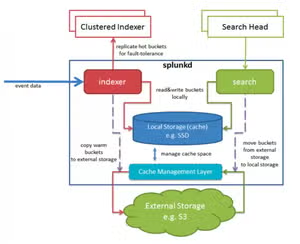
Splunk 9.0 SmartStore with Microsoft Azure Container Storage
With the release of Splunk 9.0 came support for SmartStore in Azure. Previously to achieve this, you’d have to use some form of S3-compliant broker API, but now we can use native Azure APIs.The addition of this capability means that Splunk now offers complete SmartStore support for all three of the big public cloud vendors. This blog will describe a little bit about how it works, and help you set it up yourself.

How Does Observability Help an Organization Move the Needle?
Vice President of Cloud and Security Services for Clarify360, Jo Peterson, explores why Observability is an emerging tool that could provide differentiation between top performers and trailing performers in the marketplace.

The Bulkhead and Sidecar Design Patterns for Microservices & Incident Resolution
This article looks at Bulkhead and Sidecar design patterns, including how they’re used in microservice designs — and how they help overall incident support.

Content Delivery Networks (CDNs) vs. Load Balancers: What’s The Difference?
CDNs and load balancers fulfill similar roles, but they are different tools. This article breaks down the differences so you can decide which is right for you.

Best DevOps Books: The Definitive List
In this blog post we’ll look at the core, fundamental books that have played the largest role in creating the modern DevOps movement.