Kushagra Sharma's Blog Posts
Kushagra Sharma is a Product Manager at Cisco working on AIOps products that help teams operate complex systems with intelligence and scale. He focuses on translating customer problems into practical, data-driven solutions at the intersection of AI, reliability, and software platforms. Passionate about clear thinking and strong product craft, Kushagra writes to share insights on technology, product strategy, and building systems that actually work in the real world.
Display Mode
Paginated
Filter
Author
Author URL
Limit
6
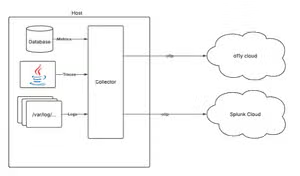
Your Data, Your Choice: Expanding Log Ingestion Options with OpenTelemetry
Native OpenTelemetry log ingestion is a commitment to providing Splunk customers with the flexibility and standardization required for the modern era of observability.

Scale Your Agent Operations With OpAMP for Splunk Observability Cloud: Introducing OpenTelemetry Fleet Management
OpenTelemetry Fleet Management provides a critical, centralized infrastructure for managing the lifecycle of observability agents and collectors at scale.
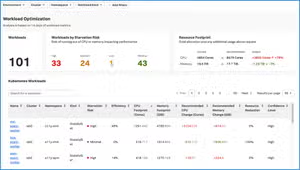
Stop Guessing Your Kubernetes Resources: Why Workload Optimization Matters More Than Ever
Introducing Workload Optimization in Splunk's Kubernetes monitoring solution, a feature that goes beyond raw metrics and gives you clear, actionable insight into how your workloads use resources.

When the Clocks Don't Match: Rethinking Cyber Resilience at GovSummit 2026
At Splunk GovSummit 2026, leaders shared how government can close the gap between fast-moving AI threats and slower institutions through smarter data use and stronger people-first resilience.

Community Spotlight: Data, Dashboards and Rally Cars with John Owen
Meet John Owen, the multi-chapter Splunk User Group Leader who’s bringing real-world insights and a bit of speed to the Splunk community.

Building the Foundation for Agentic-AI: Introducing Exposure Analytics in Splunk Enterprise Security
Exposure analytics enables Security Engineers and SOC analysts to continuously discover, enrich, and analyze entities, including assets and users, that comprise the attack surface.