Kushagra Sharma's Blog Posts
Kushagra Sharma is a Product Manager at Cisco working on AIOps products that help teams operate complex systems with intelligence and scale. He focuses on translating customer problems into practical, data-driven solutions at the intersection of AI, reliability, and software platforms. Passionate about clear thinking and strong product craft, Kushagra writes to share insights on technology, product strategy, and building systems that actually work in the real world.
Display Mode
Paginated
Filter
Author
Author URL
Limit
6

Up Your Observability Game With Attributes
Splunk Observability Specialist, Derek Mitchell, shares best practices for deciding which attributes to collect with OpenTelemetry and how they can be used with Splunk Observability Cloud to get to triage issues more quickly.

Security Insights: Tracking Confluence CVE-2023-22527
In response to CVE-2023-22527, the Splunk Threat Research Team has developed new security detections to support defenders.

Security Q&A: While Skills Gaps Persist, There’s “No Shortage of Talent”
On collaboration, optimism and building good tech teams: In conversation with Joe Fogarty, Head of the Cyber Resilience Centre, UK.

The Splunkie Awards Open Nominations for 2024
The Splunkie Awards are back and more exciting than ever because for the first time this year, we’re bringing the Global Partner Awards to the Splunkies at .conf24.
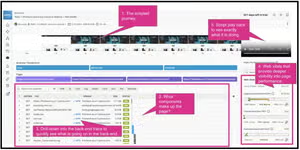
Why Knowing the Front-End and User’s Experience of Your Platform is Key to Understanding How that Platform is Working
We have all been there. When you are trying to buy a ticket and the app crashes or loads the next web page when booking a holiday only to find it takes forever and appears to hang. Our frustration level increases and if it continues, we will exit and go elsewhere. With banking apps though, we won’t move straight away but repeated bad experiences here will be remembered and eventually will make us move.

Retail in the Era of AI: An Industry Take on Splunk’s 2024 Predictions
Splunk's Derek Dykens shares a look at what retailers and consumers can expect in the year ahead.