Industries Blogs
Latest Articles
template
category
category
industries
hideCategoryPill
true
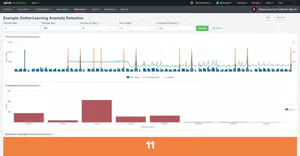
Online Learning: a Novel Approach to Applying Machine Learning in Splunk
In this blog, we’ll review how you can organize your machine learning model in a new way: online learning.

Announcing the Completed Deployment of Splunk Cloud Platform by U.S. DoD Customers
Splunk is proud to share that U.S. Department of Defense (DoD) customers are now online and actively using Splunk Cloud Platform at Impact Level 5 (IL5).
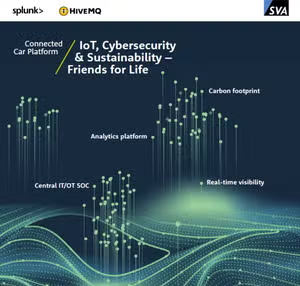
IoT, Cybersecurity and Sustainability - Friends for Life
Splunk, SVA and HiveMQ have teamed up to demonstrate the friendship of IoT, Cybersecurity and Sustainability with a real-life example of a Connected Car Platform. The Result: Cool Splunk dashboards and happy Automotive customers! To find out more, read on.

Defense Department’s Multi-Cloud Cloud Strategy: A Role for SIEM
Senate and House Armed Services Committees encourage the Defense Department to implement enabling technology in the cloud.

Harmonizing the Federal Effort on Automating Software Bill of Materials
E.O. 14028 issued guidance to enhance the nation’s software supply chain security, to include the approaching requirement of an SBOM within federal acquisitions.

Detecting Financial Crime .conf22 Session
Check out a recap of the Detecting Modern Financial Crime in-person session at .conf22.

Machine Learning To Predict Drug Effectiveness
This blog describes a simple ML method to predict whether a drug is effective (does its job) based on the features and time series data provided.

Splunk in the Financial Services Industry Today
Get a closer look at how changes in the Financial Services Industry and technology have gotten us to where we are today and where we are headed.
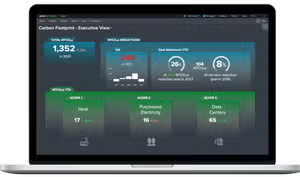
Tackling Your Carbon Footprint with the Sustainability Toolkit for Splunk
Sustainability is top of mind for organizations across all verticals and Splunk can help with the power of data. Our Sustainability Toolkit based on the Splunk platform equips organizations with capabilities to gain deep insights into their carbon footprint and as such empowers them to take the necessary actions towards their carbon neutrality goals.