Platform Blogs
Latest Articles
template
category
category
platform
hideCategoryPill
true
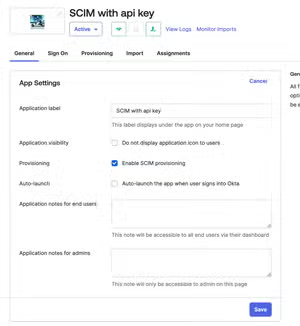
Automatic Deprovisioning of users for Okta IdP
With the release of the feature, Splunk customers can automatically deprovision users within Splunk when a user(s) are removed from the customer’s Okta Identity Provider (IdP).

Enhanced Maintenance Experience in Splunk Cloud Platform
Splunk is excited to announce a significant upgrade to our maintenance experience, designed to provide you with greater control and minimal impact.

Unlock the Value of Cloud: Introducing Splunk Cloud Value Calculator
Splunker Deepak Belani explains how our new Splunk Cloud Value Calculator can calculate how much admin effort you can save by using Splunk Cloud Platform.

What’s Next For Splunk App Developers
A sneak peak of what’s on our radar for Splunk app developers.

Introducing Splunk Cloud App Export
Splunker Spencer Baker introduces Splunk Cloud App Export, a game-changer for cloud admins and app developers.

Announcing the Splunk SPL to SPL2 Converter
Introducing Splunk’s SPL to SPL2 converter, now available for Splunk Data Management‘s Edge Processor and Ingest Processor.

Introducing Ingest Processor: An Evolution in Splunk Data Management
Splunk is pleased to announce the general availability of Ingest Processor, a Splunk-hosted offering within Splunk Cloud Platform designed to help customers achieve greater efficiencies in data transformation and improved visibility into data in motion.

Monitoring Bucket Health in Splunk Enterprise
Splunker Matteo Palarchio explains how small buckets can have a big impact on Splunk Enterprise performance.
Accelerate Productivity With Updates in Your Platform UI Home Page
A run-through of the experiences added to the redesigned home page in the most recent versions of Splunk Cloud Platform and Splunk Enterprise.